Research Program

AI-guided multiomics for cancer and One Health diagnostics.

Abouelkhair Laboratory uses machine learning, OMICs, and translational immunology to identify biomarkers and therapeutic opportunities in aggressive companion-animal cancers while advancing pathogen characterization across the One Health interface.

Current Focus

Comparative oncology and tumor microenvironment

  • Biomarker and therapeutic discovery in osteosarcoma and mammary carcinoma.
  • Immune microenvironment profiling to support translational immunotherapy.
  • Drug repurposing and predictive modeling for companion-animal cancers.
Recently Funded Project

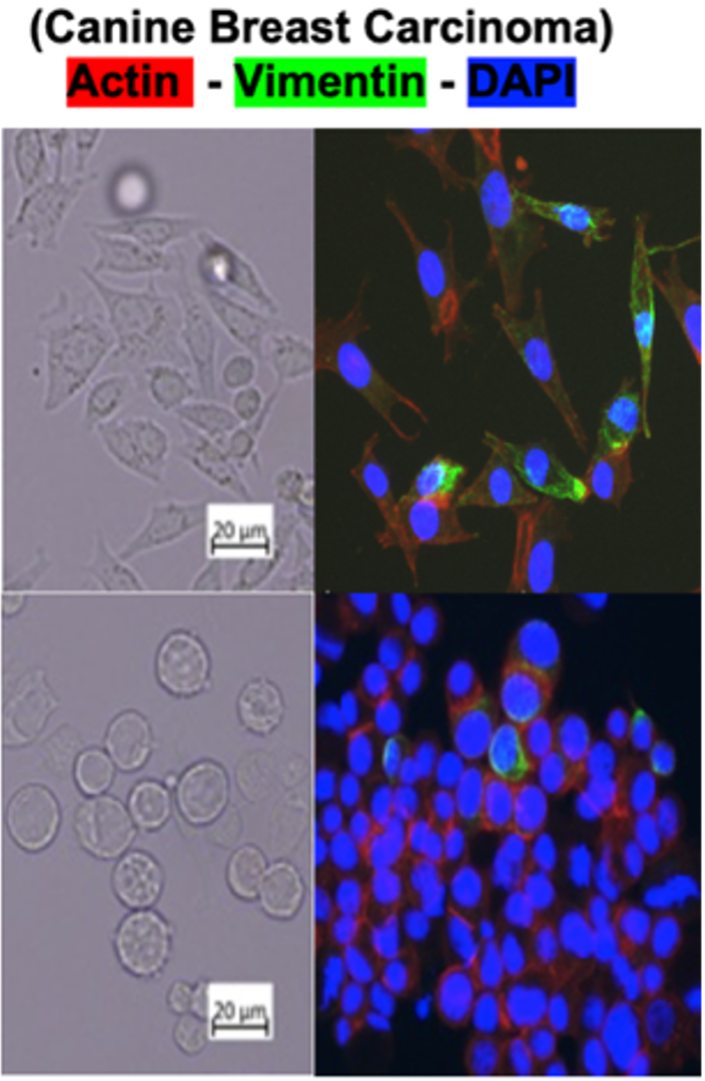
Repurposed drug effect in canine breast carcinoma

Canine breast carcinoma microscopy panels showing actin, vimentin, and DAPI staining
Actin, vimentin, and DAPI staining highlighting the effect of a repurposed drug in a canine breast carcinoma model.
Research Program

Three connected directions

The research program is organized around comparative oncology, AI-assisted multiomics, and One Health diagnostics, with each area informing the others.

Comparative Oncology

Tumor microenvironment and immunotherapy

The lab studies aggressive companion-animal cancers, especially osteosarcoma and mammary carcinoma, to identify biomarkers, immune mechanisms, and therapeutic vulnerabilities with translational value for human oncology.

AI & OMICs

Multiomics discovery with machine learning

Genomics, transcriptomics, proteomics, metabolomics, CRISPR screening, and AI-assisted bioinformatics are combined to prioritize biomarkers, therapeutic candidates, and predictive models.

One Health

Pathogen characterization and translational diagnostics

The program also advances AI-assisted pathogen identification and molecular characterization across animal and environmental systems, linking diagnostics, sequencing, and comparative biology.

Research Trajectory

From microbial pathogenesis to translational oncology

My work began in host-pathogen interactions and diagnostic laboratory leadership and has evolved into AI-assisted multiomics and comparative oncology.

  • Developed a patented vaccine composition targeting multidrug-resistant Staphylococcus pseudintermedius.
  • Led Diagnostic Immunology and Virology Laboratories supporting cancer and infectious disease testing.
  • Now apply sequencing, OMICs, and machine learning to cancer biology and translational therapeutics.
Methods And Platforms

Experimental and analytical toolkit

  • Molecular cloning, CRISPR-based microbial genome editing, and flow cytometry.
  • Serological and molecular diagnostics for blood cancers and viral diseases in animals.
  • Illumina and Oxford Nanopore sequencing for eukaryotic and prokaryotic genomes.
  • Genomics, proteomics, metabolomics, CRISPR screening, AI, and bioinformatics.
I also train students and faculty in sequencing and bioinformatics workflows while contributing genomic data and analyses to shared scientific resources.
Current Direction

Where the work is heading

  • Investigating biomarkers and immunotherapy strategies in viral infections and cancer.
  • Studying the tumor microenvironment in aggressive cancers such as osteosarcoma and mammary carcinoma.
  • Using microbial proteins as therapeutic agents and immune modulators.
  • Leading a state-funded drug repurposing effort for cancer treatment.
Scientific Contributions

Recurring contributions across the program

  • Built genomic resources with Illumina and Oxford Nanopore sequencing.
  • Integrated OMICs datasets to uncover biomarkers and immunotherapy opportunities.
  • Characterized virulence factors and antigens for translational vaccine development.
  • Co-PI, state-funded project developing new diagnostic methods for mosquito-borne virus detection.
Honors

Awards, fellowships, and certification

These distinctions span research, teaching, board certification, and competitive professional development across microbiology, immunology, virology, and academic leadership.

2024 - 2026
  • 2024 Early Career Outstanding Researcher, American Society for Microbiology.
  • 2024 Scholarship of Teaching and Learning, The University of Tennessee.
  • 2024 Southeastern Conference Visiting Faculty Travel Grant, The University of Tennessee.
  • 2024 - 2026 ASM Future Leaders Mentorship Fellowship, American Society for Microbiology.
  • 2023 Scholarship of Teaching and Learning, The University of Tennessee.
Board Certifications
  • 2020 Diplomate, American College of Veterinary Microbiologists — Veterinary Virology.
  • 2018 Diplomate, American College of Veterinary Microbiologists — Veterinary Immunology.